

Diastasis recti happens when the connective tissue between the two long abdominal muscles stretches, leaving a wider-than-usual gap between them. It is often associated with pregnancy, although it can also affect people in other circumstances.
A visible ridge or bulge down the centre of the tummy is one sign of diastasis recti. It may show up when getting out of bed, sitting up or lifting something. Some people notice this quite clearly, while others have no obvious symptoms. Working on core strength can help with everyday movement, although the amount of change in the gap itself varies.
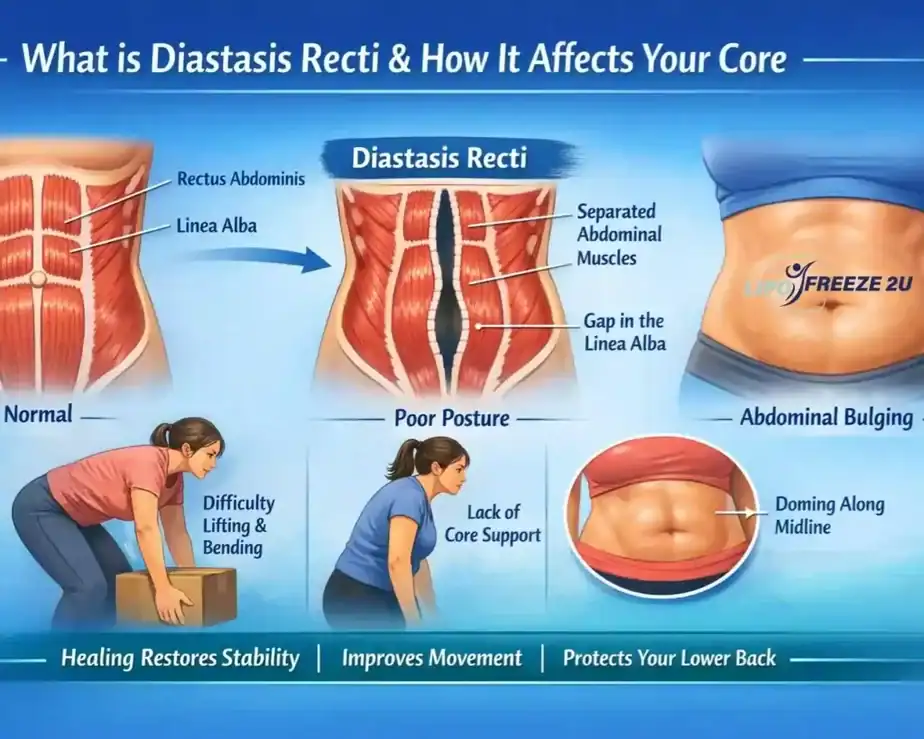
What Actually Is Diastasis Recti and How Does It Affect Your Core?
Your rectus abdominis, or the “six-pack” muscle, runs down the center of your abdomen. In diastasis recti Mansfield, this muscle stretches apart, creating a gap in the connective tissue (linea alba). See The 10 Benefits of Body Toning for Diastasis Recti Mansfield
The impact can be subtle or significant:
- A weak core can make lifting, bending, and even performing daily routine tasks more difficult.
- You experience postural problems due to a lack of deep core support.
- You may notice doming or bulging along your midline when activating your core.
Healing isn’t just cosmetic—it restores stability, improves movement, and protects your lower back.
Why Should You Be Careful With Certain Abdominal Exercises?
Some abdominal exercises may be difficult to manage when your core is not yet strong enough for them. You might notice the middle of your stomach pushing out or forming a ridge during a sit-up, plank or twisting movement.
That does not mean these exercises are permanently off limits. It may mean you need an easier variation or more time to build strength before trying them again. Pay attention to how your abdomen responds, and get advice from a physiotherapist if you are unsure.
Achieve Your Dream Body with Non-Invasive Fat Freezing
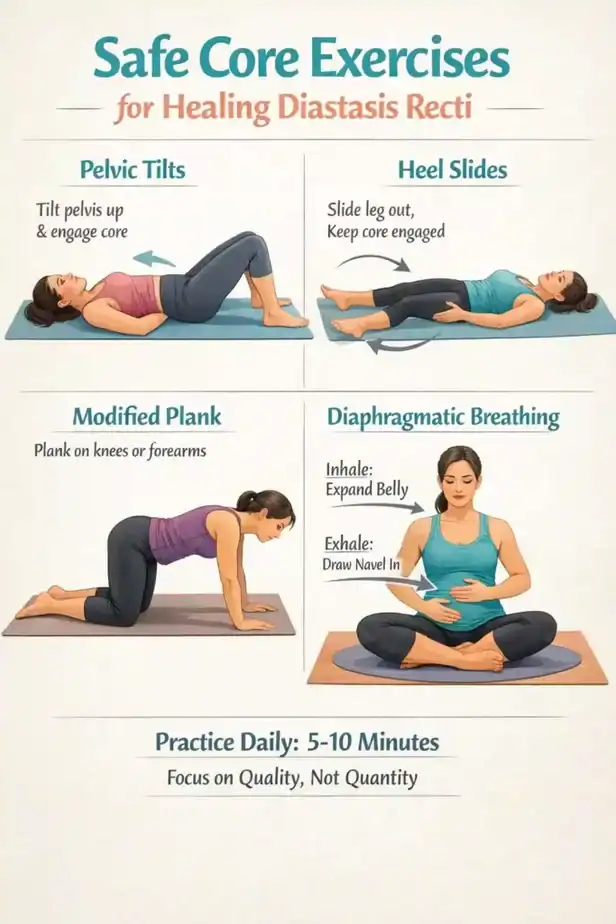
Which Core Exercises Are Safe and Effective for Healing Diastasis Recti?
Gentle movements can be a useful starting point when rebuilding abdominal strength. The exercises below are examples, rather than a routine that everyone with diastasis recti should follow.
Diaphragmatic Breathing – Lie comfortably or sit upright. Breathe in slowly and let your tummy expand naturally. As you breathe out, gently tighten your lower abdominal muscles. Keep the effort light; you should still be able to breathe normally.
Pelvic Tilts – Lie on your back with your knees bent and feet resting on the floor. Slowly roll your pelvis so your lower back moves gently towards the floor. Return to a relaxed position and repeat without forcing the movement. Keep breathing throughout.
Heel Slides – Start in the same position, with both knees bent. Slowly slide one heel away from you, then bring it back. Repeat with the other leg while keeping your movement controlled.
Modified Planks – A plank variation from your knees may be an option once you can manage easier exercises comfortably. Start with a short hold and stop if you notice abdominal bulging, pain or difficulty controlling the movement.
What Exercises Should You Avoid If You Have Diastasis Recti?
ESome movements may need to be reduced or adapted while you are rebuilding core strength. Pay attention to exercises that cause discomfort or make the middle of your abdomen bulge noticeably.
- Traditional crunches or sit-ups, if they cause doming or discomfort.
- Full planks or push-ups, if you cannot maintain control of your abdominal muscles.
- Heavy lifting that causes you to strain or hold your breath.
- Twisting movements that create discomfort or make it difficult to control your midsection.
You may be able to return to these movements as your strength improves. A physiotherapist can help you decide when and how to progress.
See Our Diastasis Recti Mansfield Treatment Price Here
How Long Will It Take to See Improvements in Diastasis Recti?
There is no fixed recovery timetable for diastasis recti. Progress depends on the extent of the separation, your symptoms, your starting strength and the type of rehabilitation you follow.
- Some people notice better abdominal control or find everyday movements easier before they see a visible change.
- Others need a longer period of guided exercise to build strength and improve their symptoms.
- The gap may remain even when abdominal function improves.
A physiotherapist can help assess your progress and adjust your exercises as your strength develops.

When Should You Consult a Professional Before Starting Exercises?
Consider speaking to your GP or a women’s health physiotherapist if you:
- Consider speaking to your GP or a women’s health physiotherapist if you:
- Still have a noticeable abdominal bulge several weeks after giving birth.
- Feel pain or discomfort when exercising, lifting or doing everyday tasks.
- Notice your abdomen bulging or forming a ridge during certain movements.
- Find it difficult to engage your abdominal muscles or control them during movement.
- Notice a new or painful lump, which may need checking for a hernia.
- Are unsure which exercises are suitable for you.
A physiotherapist can assess your abdominal muscles and help you choose exercises that match your current strength and symptoms.

How Can Body Toning Treatments from Lipo Freeze 2U Help Alongside Exercise?
Body-toning treatments and exercises have different purposes. Exercises can help you rebuild abdominal strength and improve the way your core works during everyday activities.
A cosmetic body-toning treatment should not be presented as a way to repair the connective tissue involved in diastasis recti. If you are considering treatment at Lipo Freeze 2U, discuss your medical history and goals during a consultation so you understand what the treatment can and cannot achieve.
FAQs : What Exercises Help Close Diastasis Recti (And What to Avoid)
Q: Will gentle core exercises actually close diastasis recti Mansfield, or is surgery the only way?
Not necessarily. Exercises can help improve abdominal strength, control and everyday function. Some people also see a reduction in the gap, but this does not happen in every case. Surgery is not automatically required; the right approach depends on your symptoms, the extent of the separation and whether there are other problems, such as a hernia.
Q: Why do classical crunches and sit-ups exacerbate diastasis recti Mansfield rather than helping to heal it?
Crunches and sit-ups are not suitable for everyone at every stage of recovery. If you notice your abdomen bulging along the middle or experience discomfort while doing them, try an easier exercise instead. A physiotherapist can help you work out whether you need to change the movement or build more core strength before progressing.
Q: Can I do diastasis recti exercises safely during yoga, Pilates, or other workouts?
Often, yes. You may need to adapt certain movements depending on your strength and how your abdomen responds. Start with exercises you can control comfortably, breathe normally and avoid pushing through pain or noticeable abdominal bulging. If you are returning to exercise after pregnancy, a women’s health physiotherapist can help you choose suitable modifications.
Q: How do I know if a core exercise is actually hurting my diastasis recti Mansfield instead of helping it?
Watch how your abdomen behaves during the movement. If you notice a ridge or bulge running down the middle, feel pain or struggle to control the movement, the exercise may be too demanding at that stage. Stop, try an easier variation and seek advice if the problem continues.
Q: In reality, how long does it take to see a visible difference in my diastasis recti Mansfield?
There is no set timeframe. Some people notice improvements in core control before seeing any change in the appearance of their abdomen. Others need longer-term rehabilitation. Your progress will depend on the extent of the separation, your symptoms and how your body responds to exercise.
Q: What are the core exercises to do every day to safely strengthen my abs, without exacerbating the separation?
Pelvic tilts, heel slides and controlled breathing are examples of movements that may be suitable when starting core rehabilitation. Modified planks may be introduced later, depending on your strength and control. You do not need to perform the same exercises every day or follow a fixed 0–12-month programme. The right routine should progress as your ability improves, ideally with guidance from a physiotherapist.
For Further Information, Please Call Us ON 03300 105 225